Pick BD Solar in Chilliwack for confirmed production forecasts, NABCEP-certified design, and clear pricing with no hidden adders. You'll get site-specific more info modeling for Fraser Valley conditions, LiDAR shading analysis, and code-compliant installs using Tier 1 modules with 25 to 30 year warranties. We oversee permits, BC Hydro interconnection, and incentives, then commission with IV curves and thermal imaging. Real-time monitoring, proactive O&M, and local spares keep uptime high. Discover how we optimize appearance, ROI, and financing for your residential or commercial property.
Main Points
Why So Many Chilliwack Property Owners Prefer BD Solar
Break through the clutter: Chilliwack homeowners choose BD Solar for demonstrated performance, transparent pricing, and local expertise. You need results backed by data, not hype. BD Solar offers verified production forecasts, tier-1 equipment, and monitored uptime, so you realize measurable savings. You'll obtain clear proposals with itemized pricing, no hidden adders, and accurate timelines.
You additionally profit from crews who have expertise in Fraser Valley weather, roof types, and grid nuances. Their community outreach keeps you informed on incentives, permitting updates, and utility interconnection changes. Focused on curb appeal? Their architectural integration approach coordinates array layout, conduit runs, and color-matched hardware to sustain your home's aesthetic. Factor in responsive service, warranty accountability, and post-install performance reviews, and you're choosing a partner centered on reliability and long-term value.
Custom Solar Designs for Maximum Energy Output
You obtain maximum output when your system is developed from site-specific energy modeling that factors seasonal irradiance, roof pitch, and shade maps in Chilliwack. We translate that data into perfect panel placement—azimuth, string layout, and tilt—to maximize kWh yield per square foot. You'll see lower LCOE and faster payback because every module is positioned to perform under real local conditions.
Site-Specific Energy Simulation
Calibrate performance with site-specific energy modeling that interprets your roof's reality—daylight duration, tilt, azimuth, shading, module temperature, and local weather—into a accurate production forecast. We merge satellite irradiance, ground-level sensor data, and historic CHWK climate normals to determine yield across seasons. Our microclimate analysis incorporates valley fog, orographic rainfall, and temperature swings that alter cell efficiency and inverter clipping. A detailed shading assessment documents hourly losses from trees, dormers, and nearby structures using LiDAR and horizon profiles. We model temperature coefficients, snow persistence, soiling rates, and DC/AC ratios to optimize system sizing and energy confidence intervals. You'll get bankable outputs: monthly kWh projections, performance tolerance bands, degradation curves, and financial impacts, so you can choose with evidence—not guesses.
Perfect Panel Location
Although every roofing system varies, optimal panel placement depends on hard data: we orient arrays to optimize annual kWh/kW by optimizing azimuth, tilt, row spacing, and shading buffers confirmed through LiDAR and horizon scans. We simulate hourly sun paths, then employ azimuth optimization to hit your peak production window—true south when possible, or strategic east/west splits to smooth peaks. We measure roof shading from trees, chimneys, and ridges, then locate modules to minimize mismatch losses and facilitate effective MLPE operation.
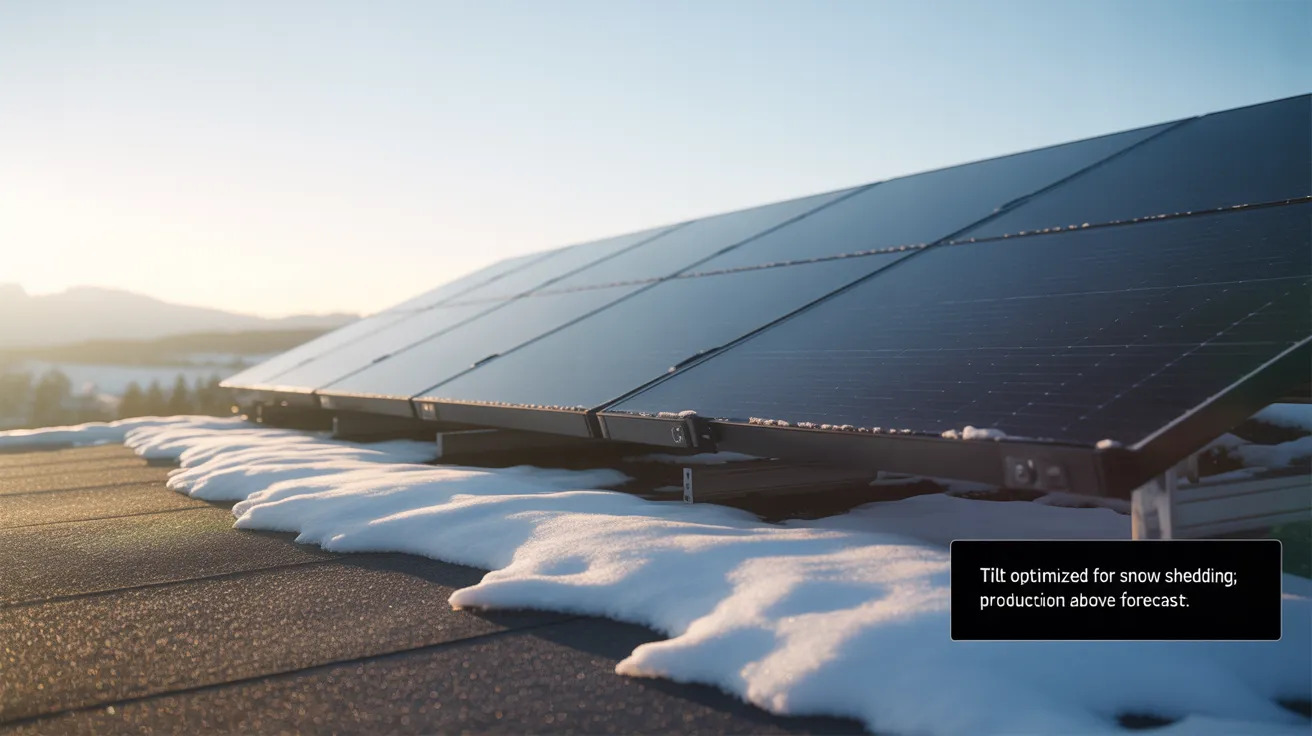
We optimize tilt for Chilliwack's specific latitude, snow-shedding, and wind loading, and establish row spacing to prevent back-row shadowing in winter. On ground mounts, we implement backtracking profiles; on roofs, we emphasize keep-outs for service corridors and code clearances. The result: improved yield, lower LCOE.
High-Quality Panels and Verified Installation Protocols
Because extended performance begins with strategic component selections, give priority to Tier 1, UL/CSA-certified modules with elevated efficiency (20–23%+), reduced annual degradation rates (≤0.5%/yr), and robust 25–30 year performance warranties. You'll optimize output and secure ROI with panel durability validated through IEC 61215/61730 testing and rigorous manufacturing standards that confirm cell quality, lamination integrity, and PID resistance.
Combine premium modules with proven installation techniques. Demand racking engineered to CSA A370/ASCE 7 wind and snow loads, corrosion-resistant fasteners, and flashed, torque-specified penetrations that preserve your roof warranty. Demand NEC/CEC-compliant wiring, AFCI/rapid shutdown, and properly sized conductors to reduce voltage drop. Select inverters with ≥97% CEC efficiency and documented MTBF data. Lastly, insist on commissioning reports: IV-curve traces, insulation resistance, thermal imaging, and production baselines to verify performance on day one.
Transparent Costs, Permits, and Rebates Made Simple
Instead of vague estimates, you get an itemized proposal that breaks down equipment, labor, electrical upgrades, permits, and interconnection fees—so you view cost per watt, projected kWh yield, and payback with real assumptions. We evaluate pricing against BC averages and utility tariffs, then model savings using your roof geometry, irradiance data, and step-rate structures. You'll see what influences price and which options deliver the best ROI.
We also remove red tape. We handle stamped drawings, electrical load calcs, and City of Chilliwack submissions, minimizing revisions and delays. For incentives, our rebate navigation identifies eligibility, stacks government programs at both levels, and files complete applications with commissioning documentation and proof-of-purchase. You get transparent numbers, compliant paperwork, and maximized incentives without administrative headaches.
Streamlined Project Timeline From Quote to Switch-On
Begin with a clear schedule that details every step from digital quote to final commissioning, typically 6–10 weeks in Chilliwack contingent upon roof complexity, utility queue, and AHJ review times. You'll obtain a same‑day remote proposal, then a site assessment within three to five business days to lock equipment, layout, and interconnection requirements. Engineering and permit timelines span seven to fourteen days, coordinated with the Authority Having Jurisdiction to prevent resubmits.
We overlap procurement with design so that panels and inverters reach the site prior to installation. Our installation team wraps up mounting, wiring, and inverter setup in 1–2 days for most homes. We finalize inspections within 3–7 days and submit paperwork to the utility company simultaneously, streamlining grid integration. Once BC Hydro grants permission to operate, we coordinate switch-on right away and hand over as‑built documents.
Monitoring, Maintenance, and Ongoing Support
You gain access to real-time performance tracking with app-based dashboards, so you can detect output drops by panel, string, or inverter. We set preventive maintenance schedules derived from manufacturer specs and local weather data to maintain yield and extend system life. You also obtain warranty and service plans with defined response times and parts/labor coverage to manage long‑term costs.
Real-Time Performance Tracking
Enable real-time performance tracking to monitor exactly how your Chilliwack solar array is performing, spot anomalies early, and safeguard ROI. With BD Solar, you get instant dashboards that present production by inverter, string, and panel, benchmarked against irradiance and temperature data. You'll know when performance differs from expected yield, not weeks later—right now.
We set up performance alerts for low-performing strings, sudden reductions, and communication faults, so you respond before losses compound. You can drill into 5‑minute intervals, compare daily trends, and export kilowatt-hour, capacity factor, and uptime reports for rebates and warranty purposes. Our team fine-tunes thresholds to your site's design and shading profile, guaranteeing signal over noise. Result: more rapid diagnostics, increased energy harvest, and transparent, data-backed decision-making.
Preventive Maintenance Planning
Proactively lock in performance with a scheduled maintenance routine that's adapted to Chilliwack's climate, site conditions, and equipment mix. We align tasks to weather patterns: spring and fall seasonal inspections check string voltage, IV curves, thermal signatures, and racking torque. You'll decrease degradation by detecting soiling, shading growth, and connector resistance before they impact yield.
During every visit, we clean modules as needed, evaluate insulation resistance, upgrade inverter firmware, and document KPIs against established baseline. Each quarter, we execute filter replacement on inverters and combiner cooling, flush drains, and inspect conduit seals to avoid moisture ingress. Every year, we adjust and calibrate monitoring sensors, secure terminations to spec, and validate ground continuity. The end result: higher uptime, consistent kWh/kW, and reliable O&M costs in line with your asset's production goals.
Warranty Coverage and Service Plans
Although the array produces kWh, the investment stands only if warranty coverage and maintenance underpin it: we combine 25–30-year module performance warranties and 10–12-year inverter warranties (extendable to 20) with a locally-based, SLA-backed service plan that features 24/7 monitoring, automated fault escalation, and guaranteed response and repair times.
You receive detailed visibility by means of a customer portal: uptime, daily yield, PR, and alert histories. If metrics drift beyond thresholds, we send certified technicians and document MTTR, parts usage, and root cause. Opt for service tiers that align with your risk tolerance—monitor-only, preventive plus corrective, or full-coverage with extended warranties and loaner inverters. Every tier include firmware updates and recall management. We streamline claims, process RMA logistics, and maintain spares on hand in Chilliwack to minimize downtime.
Residential & Commercial Solar Systems
Energize your property with tailored residential and commercial solar installations that cut operating costs and stabilize long-term energy expenses. We size systems using load profiles from energy audits, weather data, and utility rate models, then accurately select modules, inverters, and racking for your building, ground mount, or mixed-use site. You'll capture predictable kWh, lower peak demand, and realize measurable ROI.
For residential properties, we focus on aesthetic appeal and self-consumption optimization, combining high-performance panels with intelligent inverters and battery systems for backup power and time-of-use management. For commercial operations, we concentrate on demand-charge optimization, fleet electrification infrastructure, and scalable solar installations that integrate with existing building management systems.
Our methodology incorporates shading analysis, grid connection planning, and generation tracking. You get transparent performance benchmarks, transparent yield forecasts, and executable O&M recommendations that sustain success.
Regional Knowledge, Guarantees, and Financing Options
Since solar in Chilliwack thrives or struggles on site-specific details, you'll gain access to local NABCEP-certified designers who know BC Hydro interconnection requirements, Fraser Valley snow loads, and microclimate irradiance patterns—so your array is engineered for 240V split-phase homes or 600V commercial services with the right tilt, spacing, and racking. You'll see bankable components combined with tier-1 modules and racking rated ≥1.2 kPa snow, plus rapid-shutdown compliance.
Your investment is secured with 25-year performance warranties, 10–25-year product warranties, and craftsmanship warranties reinforced by regional service teams. Financing options include zero-down-payment loans, Canada Greener Homes–aligned terms, and cash-flow-positive power purchase agreements for light commercial. We champion Community outreach and installer Training programs, guaranteeing faster permitting and enhanced installation safety. Net-metering analysis and performance degradation projections calculate return on investment and payback periods with clear assumptions.
Most Asked Questions
Can You Install EV Chargers Alongside Solar Panel Systems?
Yes, it's possible to add EV chargers in conjunction with your solar panel system. We engineer home integration with Level 2 hardware, balancing solar production, battery state, and time-of-use rates. We calculate charging loads (kW, kWh/day), panel capacity, and breaker availability, then determine circuits and permits accordingly. We set up smart scheduling to prioritize solar surplus and off-peak windows, cutting charging costs 25–45%. You'll obtain monitoring, load management, and rebate-ready documentation for smooth inspections.
Can Existing Backup Generators Be Integrated With Solar?
Absolutely—solar integration with your existing backup generators is possible. You will need generator compatibility verification, a properly sized transfer switch, and a hybrid inverter that supports AC-coupling. We examine generator frequency stability, automatic start/stop signaling, and load prioritization to stop backfeed. Research indicates synchronized controls decrease fuel use by 40 to 60 percent during outages. We'll right-size batteries, set charge priorities, and program outage modes so your generator operates only when solar and battery storage cannot satisfy demand.
What Types of Roofs Are Not Ideal for Solar in Chilliwack?
Like shoes on ice, some roofs don't grip solar well. In Chilliwack, you should stay away from thatch roofs (fire danger, no proper attachment) and aging flat membranes without suitable ballast systems (seepage danger, wind displacement). Steeply sloped cedar shakes and brittle slate also underperform due to weakness and securing limitations. Heavy snow loads and high winds amplify risks. Go with engineered mounting on metal standing seam or contemporary asphalt; building evaluation and membrane improvements address most limitations.
In What Ways Do Snow and Moss Impact Panel Performance Here?
Both snow and moss decrease production. Production can drop 80–100% from snow buildup until shedding occurs; black-framed panels, slippery glass, and a 30–40° angle aid snow removal. Yield decreases 5–15% from moss shading due to blocked sunlight and hotspot development. Prevention includes anti-reflective surfaces, water-repellent coatings, appropriate array layout, and string configurations that limit mismatch. Install bypass diodes, track string-level performance, cut back overhanging vegetation, and plan yearly gentle cleanings using approved biocide.
Does Your Company Offer Solar Panel Removal and Reinstallation for Reroofing?
Yes—we remove and reinstall solar panels for reroofing. Fun fact: proper re-roof R&R can preserve up to 100% of your system's production post-project. We provide a complete turnkey solution: property evaluation, secure de-energization, tagged removal, weatherproof interim protection, and accurate reinstallation with fresh flashing. We oversee permit management, inspections, and utility company alerts. You also receive system servicing, current wiring inspections, and output validation, guaranteeing your system restores to specifications and maintains warranty coverage.
Final copyright
You've done your homework, and the numbers are gently compelling. With BD Solar, you're not just avoiding sticker shock—you're obtaining Tier-1 panels, standards-compliant installs, and yield-optimized designs that reduce electricity expenses to barely-there amounts. We'll handle permits, rebates, and timelines without fuss, then reinforce it with monitoring, maintenance, and reliable warranties. From residential to commercial properties, our local expertise and financing options ensure financial ease while your kWh production functions excellently. Ready to have sunshine power your property?